

Parents tend to rush every car seat transition. Rear-facing to forward-facing. Forward-facing to booster. Booster to no booster. Each jump feels like progress.
It isn't. Every time you move your child to the next stage too soon, you trade away protection for convenience. The booster stage is where this happens most — because a 5-year-old who's tall for their age can look "ready" long before they actually are.
Confusion is fair. Booster rules read like legalese, the industry keeps pushing kids to the next stage too soon, and you can't reason with a five-year-old who's decided she's a big kid. So here's the version that matters: when to move into a booster, what kind to pick, and the 5-step test that tells you when your child can finally ride with just a seat belt.
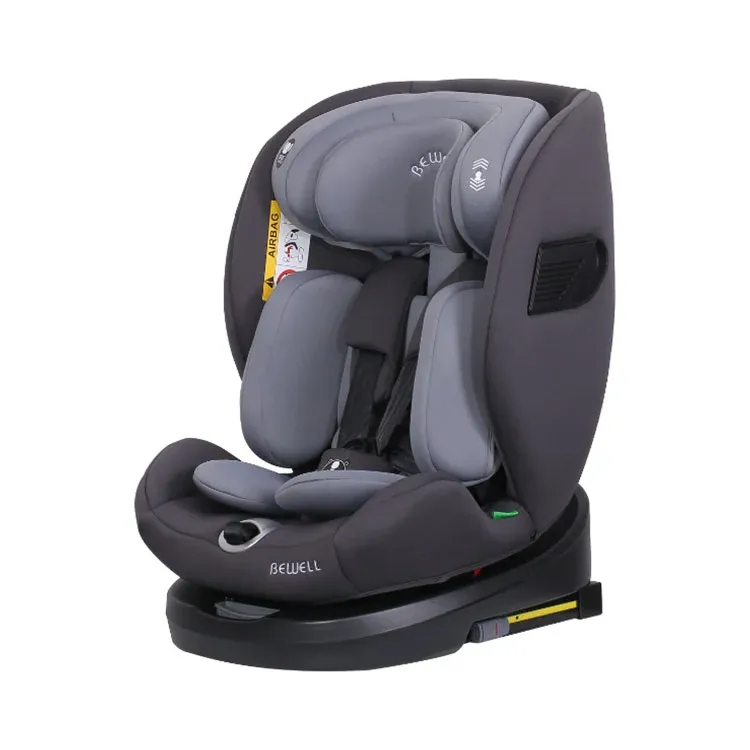
The Short Answer: The Car Seat Stages
A booster is the third stage in a four-stage journey. Here's the whole path:
| Stage | Typical Age | What Holds the Child |
|---|---|---|
| 1. Rear-facing | 0–4 years | The seat's harness + the seat shell |
| 2. Forward-facing harness | 4–7 years | The seat's 5-point harness |
| 3. Booster | 5–12 years | The vehicle's own seat belt (positioned by the booster) |
| 4. Seat belt only | 10–12+ years | The vehicle's seat belt alone |
The big mindset shift: a booster doesn't restrain your child the way a harnessed seat does. It positions the adult seat belt so it fits a small body correctly. That's why fit and behavior matter so much at this stage.
If your child is still in an earlier stage, our guide on rear-facing vs forward-facing covers stages 1 and 2.
When to Move TO a Booster (Forget Age)
Your child is ready for a booster only when both of these are true:
1. They've outgrown their forward-facing harness.
Every harnessed seat has a maximum height and weight for harness use — usually 40 to 65 lbs, and a height limit marked by the top harness slots. Your child has outgrown it when either their weight passes the limit, or their shoulders sit above the highest harness slots. Whichever comes first.
The longer you keep them in the 5-point harness, the better. A harness restrains across five points; a seat belt restrains across two. So don't move to a booster the day they turn 4 — move when they physically don't fit the harness anymore.
2. They can sit properly for the entire ride.
This is the part parents underestimate. A booster only works if the seat belt stays positioned correctly — which means your child has to sit still, back against the seat, the whole trip. No slouching, no leaning over to grab a toy, no tucking the shoulder belt behind their back.
A wiggly 4-year-old who falls asleep sideways isn't ready, no matter their weight. A calm 6-year-old who stays put is. Maturity is a safety requirement here, not a nice-to-have.
An all-in-one seat like our BW23 (ages 0–12) keeps the harness option available longer, so you're not forced into a booster before your child is ready.
Why Most Kids Aren't Ready Until 5 or Later
The AAP recommends keeping children in a forward-facing harness as long as possible, up to the seat's limits, before moving to a booster. For most kids, that lands somewhere between 5 and 7.
Two reasons:
- Body size. Younger children's hip bones aren't developed enough to keep a lap belt positioned low. The belt rides up onto the soft belly, and in a crash that can cause serious internal injury — sometimes called "seat belt syndrome."
- Behavior. A booster relies on the child sitting correctly without an adult constantly checking. Most kids under 5 simply can't sit still long enough for that to be safe.
So if a relative says "he's four, he can use a booster now" — that's the convenience talking, not the data.
High-Back vs Backless Boosters: Which One?
Two kinds of boosters. They do the same core job — lift your child so the seat belt fits — but they're not identical.
| High-Back Booster | Backless Booster | |
|---|---|---|
| Head/neck support | Yes — built in | No — relies on vehicle headrest |
| Belt positioning | Guides for both shoulder and lap belt | Lap belt guides only |
| Best for | Cars with low seatbacks / no headrest | Cars with high seatbacks + headrests |
| Portability | Bulkier | Light, easy to move between cars |
| Typical use | Younger booster-age kids | Older, taller booster-age kids |
The general rule: start with a high-back booster, especially if your vehicle seat is low or has no headrest. A backless booster is fine later, once your child is taller and your car's headrest reaches the top of their ears.
One hard rule for either type: a booster requires a lap-AND-shoulder belt. Never use a booster with a lap-only belt — there's nothing to position across the shoulder, and it can be dangerous.
The 5-Step Test: When to Stop Using a Booster
Here's the question parents get wrong most often: when can my child stop using a booster and just use the seat belt?
The answer isn't an age. It's a 5-part test. Your child is ready for the seat belt alone only when they pass all five:
- Their back rests flat against the vehicle seat.
- Their knees bend naturally at the edge of the seat, feet flat on the floor.
- The lap belt sits low across the hips and upper thighs — not the belly.
- The shoulder belt crosses the middle of the shoulder and chest — not the neck or face.
- They can sit like this for the entire ride, every ride.
If even one answer is no, they still need a booster. Full stop.
Most kids don't pass all five until they're around 4'9" (about 145 cm) tall, which usually happens between ages 10 and 12. Yes, that often feels "too old" to parents. It isn't. The seat belt was designed for an adult body, and the test simply checks whether your child's body is close enough to fit it.
This 5-Step Test is the mirror image of the question we answer in our pillar guide on when babies can move from rear-facing to forward-facing — same principle, opposite end of the journey: fit beats age, every time.
State Laws on Booster Seats
As with every car seat stage, state law is the legal minimum — not the safety standard. Many states let kids leave a booster earlier than the 5-Step Test would allow.
A quick snapshot (always confirm with your state's current DMV/highway safety page):
| State | Booster Required Until (roughly) |
|---|---|
| California | Age 8 OR 4'9" tall |
| New York | Age 8 |
| Texas | Age 8 OR 4'9" tall |
| Florida | Age 5 (one of the most lenient) |
| Illinois | Age 8 |
| Washington | Age 8 OR 4'9" tall |
The takeaway is the same as it is for every stage: legal and safe are not the same thing. Florida may let a 5-year-old out of a booster, but the 5-Step Test won't — and the test is what protects your child in a crash.
Common Booster Seat Mistakes
❌ Switching to a booster too early. Moving out of the 5-point harness before your child outgrows it. The harness is safer — use it as long as it fits.
❌ Using a booster with a lap-only belt. Boosters need a lap-and-shoulder belt. A lap-only belt has nothing to position across the shoulder.
❌ Letting the shoulder belt sit behind the back or under the arm. Kids do this when the belt feels annoying. It defeats the entire point of the booster. The belt must cross the shoulder.
❌ Graduating to a seat belt based on age. "She's 8, she's done with the booster." Use the 5-Step Test, not the birthday.
❌ Letting kids ride in the front seat too soon. The back seat is safest for everyone under 13, booster or not.
FAQs
At what age should my child use a booster seat?
There's no fixed age. Move to a booster only after your child outgrows their forward-facing harness (usually 40–65 lbs) and can sit properly for the whole ride — typically around age 5 to 7.
When can my child stop using a booster?
When they pass all five parts of the 5-Step Test: back against the seat, knees bent at the edge, lap belt low on the hips, shoulder belt across the middle of the shoulder, and able to stay seated the whole ride. Most kids reach this around 4'9" and age 10–12.
Is a high-back or backless booster better?
Start with a high-back booster, especially if your car has a low seatback or no headrest — it adds head and neck support and positions both belts. A backless booster is fine later, once your child is taller and the vehicle headrest reaches their ears.
Can I use a booster with just a lap belt?
No. A booster requires a lap-and-shoulder belt. With a lap-only belt there's nothing to position across the shoulder, which makes it unsafe.
My 8-year-old wants to stop using the booster. Is that okay?
Only if they pass the 5-Step Test. Many 8-year-olds don't yet — they're not tall enough for the seat belt to sit correctly. If the lap belt rides up on the belly or the shoulder belt cuts across the neck, they still need the booster.
Can a booster seat go in the front seat?
It's strongly discouraged. The back seat is the safest spot for any child under 13. Keep boosters in the back.
The Bottom Line
Every car seat stage follows the same rule, and the booster stage is no exception: fit and maturity decide the switch, not the calendar. Keep your child in the 5-point harness until they outgrow it, then in a booster until they pass the 5-Step Test — usually around age 10 to 12.
It feels slow. It feels overprotective. But the kids who stay in each stage the longest are the ones the safety data protects best.
If you'd rather not buy a separate seat for every stage, an all-in-one like our BW23 (ages 0–12) carries your child from rear-facing through forward-facing to booster in a single seat — and it's independently crash-tested and certified to ECE R44/04 or i-Size R129. See our full range of car seats for the right fit.
Run the 5-Step Test on your kid tonight. You might be surprised how many they don't pass yet.
About the Author
This article is for informational purposes. Always consult your car seat's manual and a certified Child Passenger Safety Technician for guidance specific to your child and vehicle.
Sources:
- American Academy of Pediatrics — Child Passenger Safety Policy Statement (2018, reaffirmed February 2025)
- National Highway Traffic Safety Administration — Booster Seat Recommendations
- Safe Kids Worldwide — Booster Seat Safety & the 5-Step Test
- Insurance Institute for Highway Safety (IIHS) — Booster Seat Evaluations